Performative apologies with no change in behavior compound the harm. Allies - don’t be fooled by this.
When Deaf and Hard of Hearing people walk out, due to lack of access, walk out with them. Do not be complicit. Do not stay in a meeting that is not accessible.
A decade ago, a Deaf parent sued Seattle Public Schools over lack of access to community engagement, community events, and information. The Deaf parent won. Despite the court decision, SPS has continued to fail to provide ASL interpretation, and has repeatedly denied access to Deaf parents and community.
In 2021 a Deaf staff member and families filed a complaint with the Office of Civil Rights against Seattle Public Schools over the lack of accessible alarm systems, and Superintendent Jones signed a Settlement agreement that said accessible alarm systems would be installed by fall of 2023. As the deadline approached, Deaf and Hard of Hearing (DHH) leadership became concerned that they weren’t seeing any information or progress. DHH leadership, in partnership with SCPTSA, reached out to relevant central office staff only to discover that the staff with the job descriptions that indicated they should implement this work, had never been told about the settlement agreement and work had not begun. Once staff were alerted to the issue, work began to identify a vendor, to partner with DHH leadership, and to create a plan for implementation. Superintendent Jones then changed who, on the SPS side, was responsible for the work, and the new staff member in a meeting with DHH leadership, used offensive language, and said that the work would not progress. SPS hosted a meeting for DHH community about accessible alarm systems, but the meeting had to be canceled because SPS had not hired interpreters. DHH leadership hired a lawyer, advocated, got support from legislators, met with and partnered with other staff, and finally, in May of 2025, SPS has finally begun to install accessible alarm systems in the DHH pathway schools.
In 2023 when Deaf Students, Hard of Hearing Students, and hearing students at TOPS wrote Superintendent Jones, asking to keep the ASL teacher at their school, a teacher they had advocated for, so that DHH students and their hearing friends could communicate without involving an adult. When Superintendent Jones finally responded, months later, after repeated requests for a response, he responded by saying “thank you” in a School Board Meeting with no ASL interpretation. Many of these students are too young to be able to access captions. Also, TOPS did lose the ASL teacher that year.
For years, DHH leadership has met with staff, working together to increase access, has volunteered their expertise, their time, and their effort, offered to provide trainings, write procedures, and advocate for needed funding. They have been excellent partners within Seattle Public Schools, but the work can only go so far without cooperation from the Superintendent and School Board.
Recently, DHH families showed up at the School Board Meeting to testify about the ways that SPS has blocked them from participating in their students’ education, and to speak about the issue of CODAs (Children of Deaf Adults) being denied preference over hearing students with hearing parents in getting into the Deaf and Hard of Hearing Pathway Schools. It is important for CODAs to be able to access Deaf culture and Deaf community, but most importantly families wanted to be able to be a part of their students’ education, volunteer in a friendly space, and be at a school that already had systems to provide access. When families tried to explain this to enrollment services, families were treated dismissively. It should be noted, that when one of the parents called in to testify at the School Board Meeting, that parent had to hire their own interpreter, because SPS does not provide an accessible remote testimony option for people who rely on ASL interpretation.
At that School Board meeting, throughout the meeting cameras kept cutting away from the interpreters, and the community repeatedly reached out to ask SPS to put the interpreters on camera. Interpreters had been hired to work until 9PM, but families didn’t realize that when the interpreters left, they weren’t coming back. The School Board continued with the meeting after interpreters left leaving families who rely on interpretation with no access to the meeting. It was only after interpreters had left that discussion about DHH issues began. DHH leadership emailed School Board, Superintendent, and District leadership, and received a response from Director Sarju. No response from President Topp or Superintendent Jones, both of whom were in a position to address the access issue.
This week SPS had advertised a school board engagement, but only shared that the focus would be enrollment and waitlists at the last minute. DHH families for whom this was a top priority issue reached out to SPS to ask for interpretation. With no obvious way to ask for interpretation they reached out through “Let’s Talk” on the school district’s website. At least one family received notification that SPS “had not had a positive response and I would not anticipate that the engagement will have ASL interpreters.” Families received this notice too late to adjust their plans. With the well-known interpreter shortage, it is accurate that it is hard to hire interpreters on short notice. However, SPS should have planned for this, should have considered DHH families to be part of community, and given that families had just spoken about this issue at the School Board Meeting should have anticipated that families would be particularly interested in this engagement.
DHH families have learned that Seattle Public Schools staff will be holding a meeting to discuss DHH issues. No DHH families are invited, but SPS is including a senior staff member who has actively discriminated against these families. Superintendent Jones has been told on multiple occasions about the discrimination by this staff member, and has chosen to continue to promote this person.
Seattle Public Schools has been apologizing to Deaf and Hard of Hearing Families for a long time with no substantive change. This is despite having some staff who have worked very hard to partner and to uplift the DHH community.
It is time for everyone to join DHH families and say “saying sorry isn’t enough. We need change. The Safe and Welcoming Environments guardrail means nothing if it does not apply to everyone. Policy 0010 means nothing if not implemented. Policy 0030 means nothing if not implemented. The next Superintendent must not discriminate against ANY of our families.”
Samantha Fogg and Sebrena Burr, Co-Presidents, SCPTSA
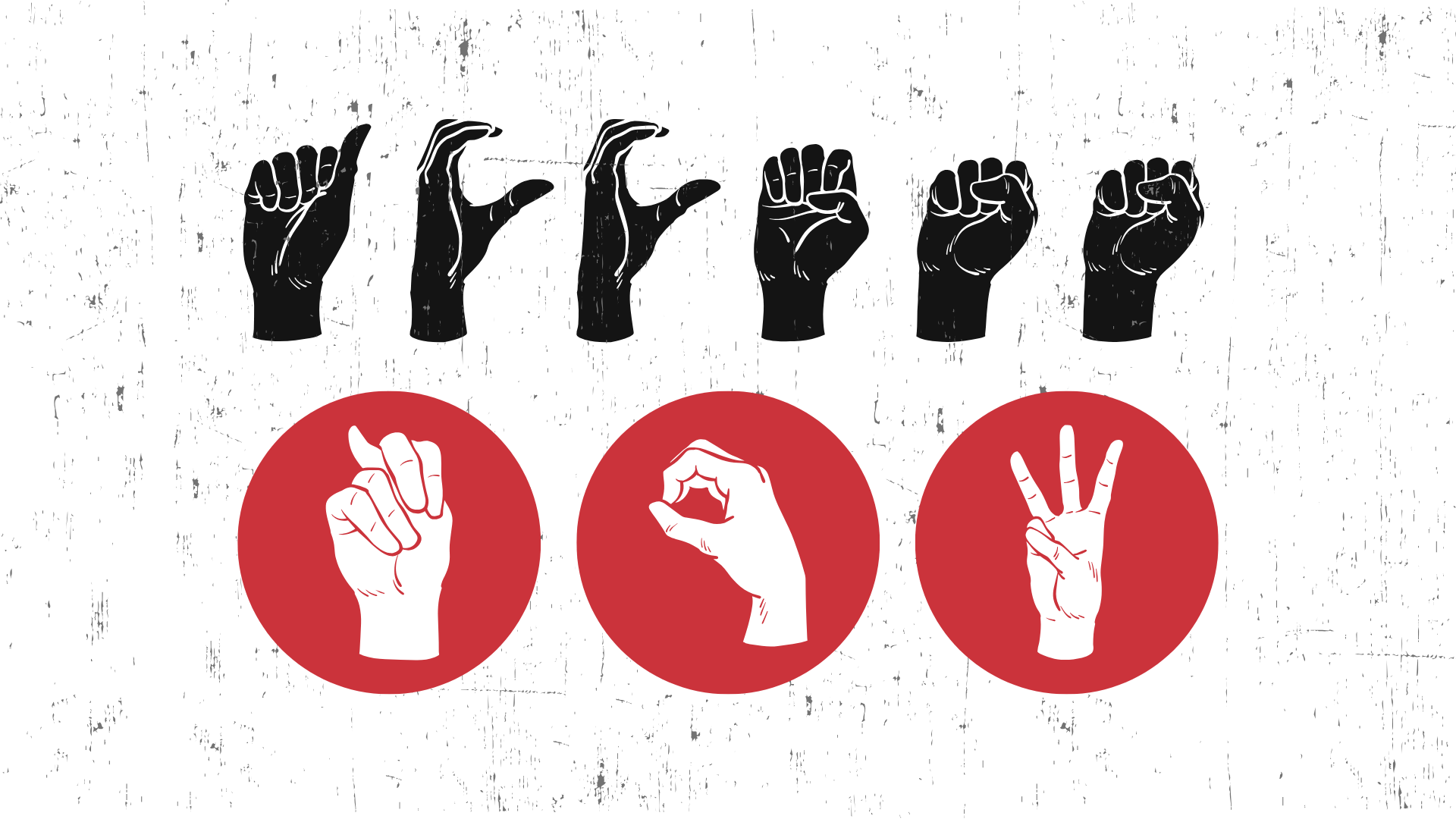
Image Description: A black, white, and red graphic with ASL text that reads "Access Now.”